
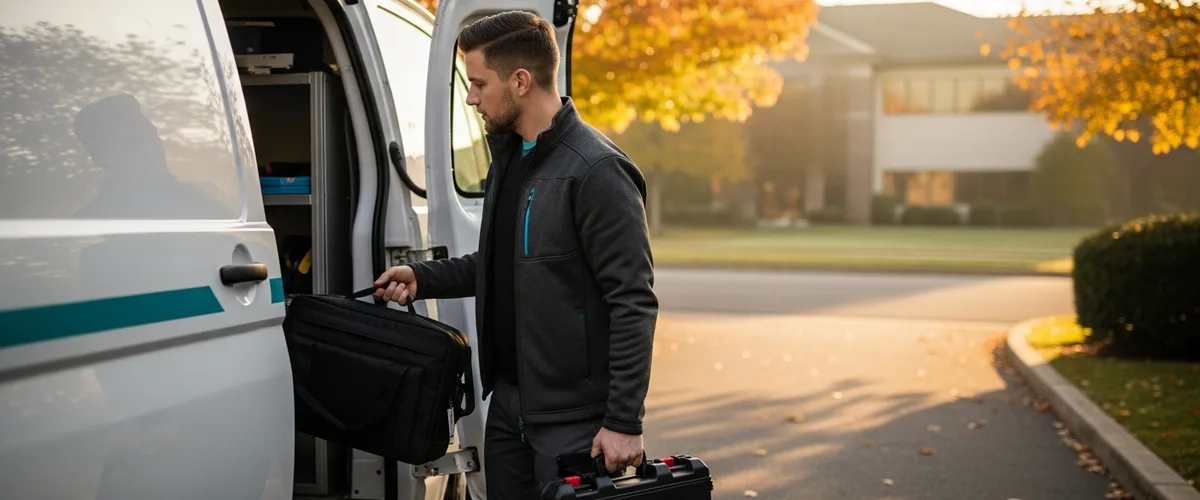
Most IT companies that claim to cover Rockland, Westchester, and Bergen counties are either based somewhere else entirely or spread thin across a dozen other counties too. VJNetworks has covered all three from a single Rockland County home base since 2004.
Not a knock on anybody. Just math. A company big enough to blanket three counties across two states usually got there by covering thirty counties first, which means somewhere along that growth curve, without anyone deciding it on purpose, your business quietly turned into a ticket number instead of a name. Nobody planned it that way. It just happens. A company small enough to know your name by heart? Usually only made it as far as one county before running out of runway.
I’ve watched this pattern for twenty-two years now. I founded VJNetworks in Rockland in 2004. Still here. Never left the county. And I still get calls every month from owners in Westchester or Bergen who found five companies claiming to serve their area. Couldn’t find one that actually felt local. Not one.

What “Covering an Area” Actually Means
When a business owner says an IT company “covers” their area, they usually mean three things. Someone can be on site the same day if a server dies. Whoever answers the phone already knows their setup. And the company understands the specific compliance rules that apply in their state, not a generic national policy written for nowhere in particular.
Most companies with a service area page listing three counties fail at least one of those. Usually two. Not because they’re bad at IT. Because the business model doesn’t leave room for it. So why does almost everyone still claim they’ve got you covered? Because the website copy is free. The follow-through is expensive.
The Two Kinds of Coverage That Aren’t Really Coverage
Search for an MSP near the Rockland, Westchester, and Bergen border and you’ll find two very different kinds of company claiming the same territory.
The first type is a genuine specialist in one county who added a service area page for the other two, mostly for search engines. Fair enough. Nothing wrong with that as a marketing move. But ask who actually shows up on site, and you’ll often hear a name from forty minutes away. Apologizing for traffic.
The second type solved the coverage problem by getting big. Really big. Exigent, for example, lists thirteen New Jersey counties on its site, plus New York City, Rockland, Orange, and Westchester in New York, and I get why they’d want that much territory listed since a bigger service area probably helps with search rankings, but try picturing a fifteen-person business actually feeling like a priority account inside a company covering that much ground. Delaney Computer Services runs offices in Mahwah, Midtown Manhattan, and Coral Springs, Florida, all under one roof. Both are real, capable companies with real engineers. Good ones, even. Neither one is going to feel like your IT department knows your name though. You’re one account spread across two states. Sometimes a time zone. Just another number in a company with hundreds of others just like you.
Small businesses need something in between those two failure modes. Big enough to carry real depth on cybersecurity and cloud infrastructure. Small enough that the same three or four people work on your systems every single time you call.
| Coverage Model | Real Local Office | Typical Footprint | Response Model | Best Fit |
|---|---|---|---|---|
| Single-county specialist | Yes, in their home county | 1 county | Fast locally, slower elsewhere | A business that never expands past one county |
| Large regional MSP | Rarely near you specifically | 10+ counties or multi-state | Ticket queue, SLA-based | A large enterprise that needs a national NOC |
| Right-sized tri-county MSP | Yes, one office, twenty-plus years | 3 counties, on purpose | 15-minute live response | A growing small business in Rockland, Westchester, or Bergen |

How You Actually Tell Them Apart
A service area page will tell you almost nothing on its own. Almost nothing. Not one thing. Here’s what actually tells you the truth.
- Ask where the office is, not where the trucks go. A real answer is a street address you could drive to this afternoon.
- Count the counties listed on their site. Past four or five, you’re a small account inside a much bigger machine.
- Ask who you’ll actually talk to next time something breaks. Whoever’s on shift is a different promise than a name you’d recognize.
- Look for a physical history in your specific county. Twenty-two years in Rockland County isn’t a slogan. It’s business filings from the 2000s and local clients who’ve been with us since their own companies were smaller.
- Ask what happens if you’re unhappy in the first three months. We tear up the contract. No fight. Not every company is willing to say that part out loud.
What Twenty-Two Years in Rockland County Actually Looks Like
We’ve kept 97 percent of our clients for over twenty years. Not an average from some huge customer base where a few losses vanish in the noise. At the size we’ve chosen to stay, every client is a name I actually know. Losing one still stings. Staying small on purpose, in exactly three counties instead of thirty, is a lot of why that number holds up.
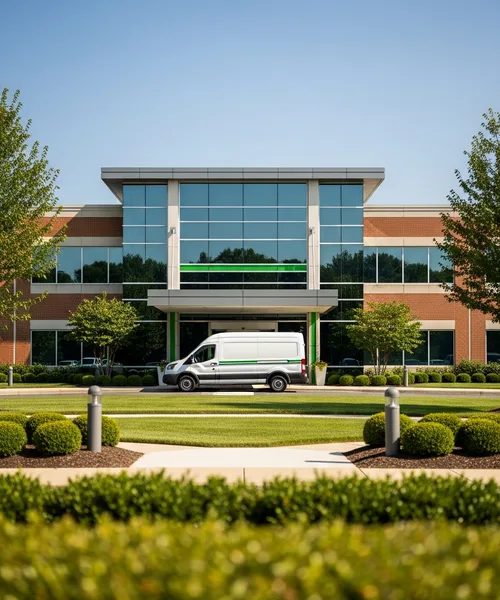
It’s also why we could take on the biggest scaling job of our history without losing that model. One client grew from five locations to more than sixty, spread across the country. Almost overnight. We didn’t hand them off to a national help desk somewhere else. Our own team architected the cloud infrastructure and built out every site themselves, over months of after-hours work, and somehow still stayed the same handful of people that client had been calling for years instead of rotating in a fresh face every time the account changed hands.
We’re a Microsoft Partner and a Dell Partner, our engineers hold Azure certifications, and we’re HIPAA compliant for the healthcare and accounting clients who need it, which sounds like a lot of acronyms until you remember they’re the reason a patient’s medical record doesn’t end up somewhere it shouldn’t. Not the real reason people stay, though. CompTIA’s own research found that businesses under 100 employees are more than twice as likely to outsource their IT as larger companies, mostly because they can’t justify a full internal department. What that research doesn’t measure is what happens after. Whether the company on the other end of the phone still remembers you exist a year later.
Independent research firm ITIC has tracked the rising cost of computer downtime for over a decade, and its surveys keep finding some version of the same thing no matter the company size. The bill is bigger than owners expect going in. Every time. Our own clients tell us an unplanned day of downtime runs them somewhere between five and ten thousand dollars. That range moves depending who you ask, and I’ll admit we’re estimating from what clients tell us after the fact, not some formal study. That’s before anyone accounts for the stress of not knowing who to even call.
Good coverage was never really a map. Never was. No trick to it. It’s a phone number that gets answered by someone who already knows your server room, whether you’re in New City, White Plains, or Hackensack. That’s what we built here, and it’s the only reason we’ve stayed in exactly three counties for twenty-two years instead of chasing the thirty-county version of this business.
If you want to see what that actually looks like for your managed IT, the fastest way is to just ask. Get a free IT assessment and we’ll tell you honestly, in person, whether we’re close enough to matter for your business. No pressure. No pitch.